There’s something wonderfully unexpected about the film that India has chosen for the Oscars this year.
It’s not a massive spectacle. It’s not built around a larger-than-life star. It doesn’t try to explain India to the world in the most obvious way.
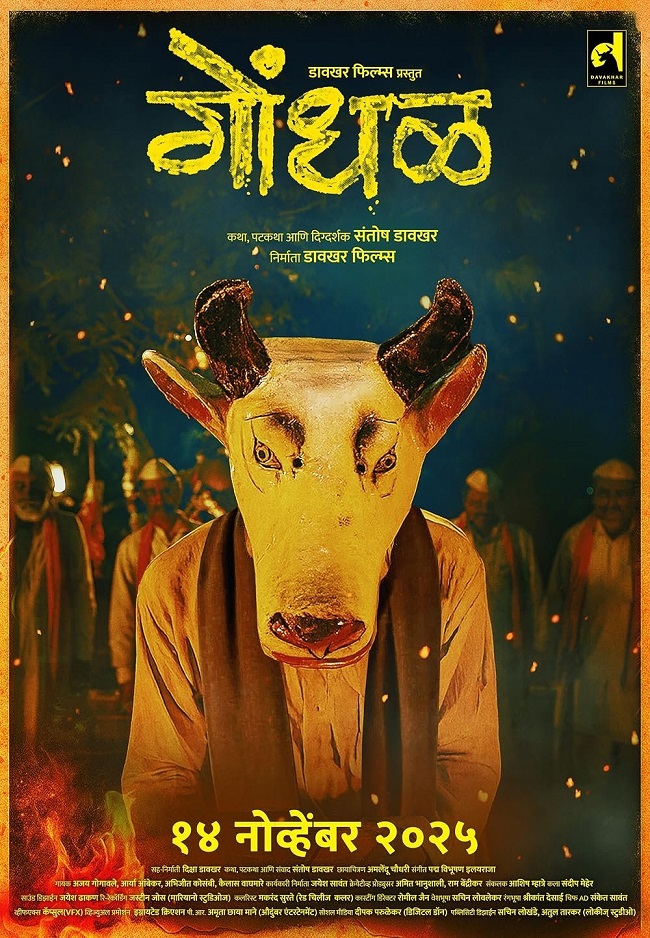
It is Gondhal — a Marathi film set in rural Maharashtra, unfolding over a single night around a wedding and a traditional folk ritual that has been part of the state’s cultural fabric for generations.
And now, it is India’s official entry for the 99th Academy Awards, in the Best International Feature Film category. The Film Federation of India selected the film from 33 submissions
That itself is a pretty big moment for Marathi cinema.
A wedding night, but not quite the wedding story you expect
At the centre of Gondhal is a newlywed couple. The story takes place over one night, against the backdrop of the traditional Gondhal ritual.
And that setting matters.
Because Gondhal isn’t simply something the film has added for colour or atmosphere. The ritual is deeply connected to Maharashtra’s folk and devotional traditions, combining music, singing, dance, storytelling and the worship of deities.
So as the wedding celebrations unfold, the film slowly gets into something much more complicated — faith, relationships, desire, social expectations and the things people don’t necessarily say out loud.
That is where Gondhal seems to find its tension.
What begins with the familiar chaos and energy of a wedding night gradually becomes something darker and more psychological.
The Maharashtra that rarely gets this kind of spotlight
One of the most interesting things about Gondhal is how unapologetically local it is.
The film is rooted in rural Maharashtra and its traditions rather than trying to make everything look universally familiar. Director Santosh Davakhar, who has also written the film, puts the culture of the region right at the centre of the story.
And perhaps that’s what makes the Oscar selection particularly interesting.
Indian cinema has always had many Indias inside it. Big cities, small towns, different languages, different customs, different ways of celebrating, grieving, believing and living.
Gondhal comes from one very specific place — Maharashtra — and tells its story through that cultural lens.
Yet the emotions underneath it aren’t necessarily limited to that place.
From a Marathi film to the Oscars
The film was selected from 33 films submitted for consideration this year. It also isn’t coming completely out of nowhere.
Gondhal has already received recognition on the festival circuit, including at the International Film Festival of India, where Santosh Davakhar won the Silver Peacock for Best Director. It has also received recognition at festivals in Bengaluru, Pune and elsewhere.
And perhaps that’s what makes the Oscar selection particularly interesting.
Indian cinema has always had many Indias inside it. Big cities, small towns, different languages, different customs, different ways of celebrating, grieving, believing and living.
Gondhal comes from one very specific place — Maharashtra — and tells its story through that cultural lens.
Yet the emotions underneath it aren’t necessarily limited to that place.
From a Marathi film to the Oscars
The film was selected from 33 films submitted for consideration this year. It also isn’t coming completely out of nowhere.
Gondhal has already received recognition on the festival circuit, including at the International Film Festival of India, where Santosh Davakhar won the Silver Peacock for Best Director. It has also received recognition at festivals in Bengaluru, Pune and elsewhere.
For Marathi cinema, this is another important chapter.
Earlier Marathi films such as Shwaas, Harishchandrachi Factory and Court had represented India in the Oscar race. Gondhal now becomes the latest Marathi-language film to carry that responsibility.
But there is an important distinction here: being selected as India’s official entry does not mean the film has already received an Oscar nomination. It now enters the Academy’s subsequent selection process.
Still, getting this far is no small thing.
Maybe the most Indian thing about it is that it’s so specific
There is a tendency to think that a film representing India internationally needs to somehow show everything that makes the country what it is.
Gondhal seems to take the opposite route.
It focuses on one night.
One wedding.
One community.
One tradition.
And all the complicated emotions that can spill out when people, expectations and old beliefs come together.
That makes its Oscar journey worth watching.
Because sometimes a story doesn’t need to speak for an entire country.
Sometimes, it just needs to tell one place’s story honestly enough that someone sitting thousands of kilometres away can still feel something.
And now, that very Marathi story is heading to the world’s biggest film stage