


Vishwanath & Sons:


There was a time when a Tamil film doing well in the Telugu states was a nice little bonus.
Now? It is becoming part of the plan.
Look at what is happening with Vishwanath & Sons. The Suriya-starrer opened on August 14 and, within two days, crossed the ₹100 crore worldwide mark. By the end of its first three days, the film had reportedly reached ₹110.22 crore worldwide. More importantly, the film is finding genuine traction in Telugu-speaking centres, including Hyderabad, Vizag, Vijayawada and Guntur.
And this is not an isolated case.
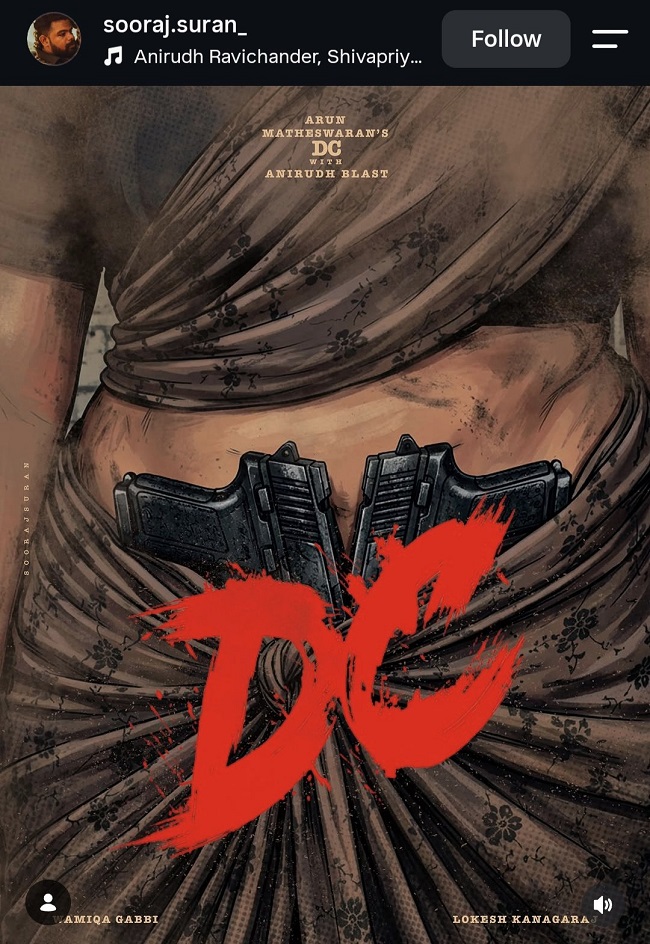
DC, the Lokesh Kanagaraj-led action drama starring Lokesh himself, has also managed to build momentum beyond Tamil Nadu.
So, what exactly is going on here?
The easy answer is: Telugu audiences like Tamil stars.
But that is only half the story.
Telugu audiences stopped treating Tamil cinema as “outside cinema” a long time ago
Suriya is probably one of the clearest examples.
He isn’t simply a Tamil star who happens to have a Telugu following. He has spent years building one. Films such as Ghajini, Ayan, Singam, 24 and Soorarai Pottru created a familiarity that goes beyond language.
The same thing has happened with other Tamil stars.
Vijay has a massive following in the Telugu states. Rajinikanth hardly needs an introduction. Dhanush has found an audience. Karthi has had a particularly comfortable relationship with Telugu viewers. And directors such as Mani Ratnam, Shankar, Lokesh Kanagaraj and now Venky Atluri have helped blur the line even further.
So when a Tamil film arrives in Hyderabad or Vijayawada today, audiences don’t necessarily look at it as a “dubbed film”.
They look at it as another South Indian release.
That is a pretty big change.
And then there is Venky Atluri
This is where Vishwanath & Sons gets an advantage that a lot of Tamil films don’t have.
The film is directed by Venky Atluri, the Telugu filmmaker behind Tholi Prema, Rang De, Vaathi/Sir and Lucky Baskhar.
In other words, the film may be Tamil on paper, but its DNA is not entirely Tamil.
That matters.
Venky understands what works with Telugu family audiences. He knows the rhythm of Telugu commercial cinema, the importance of emotional scenes, songs and family relationships. And Vishwanath & Sons is exactly the sort of film that can travel because its central hook is not language-specific.
It is about relationships, family, love and emotion.
You don’t need subtitles to understand that.
The Telugu market itself has changed
This is probably the bigger story.
Telugu cinema has become one of India’s strongest theatrical ecosystems. Hyderabad has become a major hub for film business, premieres, promotions and distribution. And audiences there have become increasingly comfortable watching films from outside the Telugu industry.
That means a good Tamil film doesn’t necessarily have to fight for survival in the Telugu states anymore.
It has to compete.
That’s a very different situation.
Vishwanath & Sons has had strong visibility in Hyderabad and other Telugu markets, with the film playing in cities such as Hyderabad, Vijayawada and Guntur.
And the makers clearly understood the importance of the market. Suriya also made a Telugu promotional appearance for the film and specifically thanked his fans in the Telugu-speaking states.
That kind of promotion isn’t ceremonial anymore.
It is business.
Then comes the Lokesh factor
DC is a slightly different case.


This isn’t a family drama travelling through emotion. It is an action film built around Lokesh Kanagaraj, Anirudh Ravichander and Arun Matheswaran’s combination of names and style. Lokesh is also making his lead-actor debut with the film.
And Lokesh himself has become a brand.
After Kaithi, Master, Vikram and Leo, his name carries weight in Telugu markets too. People who may not know every Tamil actor or director certainly know “Lokesh”.
That’s the advantage of South Indian cinema today.
A filmmaker’s brand can travel faster than the language.
But is this really “Tamil dominance” in Telugu territory?
I’d be careful with that phrase.
It isn’t that Tamil cinema has suddenly taken over Andhra Pradesh and Telangana.
Telugu films still have the home advantage. They have deeper local star systems, stronger regional identification and a distribution network built around their own industry.
What is changing is something more interesting.
The Telugu market is becoming a major second theatrical home for successful Tamil films.
And the gap between the two industries is getting smaller.
A Tamil film with a big star, a recognisable filmmaker, strong Telugu distribution and the right kind of story can now open in Telugu centres with expectations of real business — not just whatever comes after the Telugu releases have taken all the premium screens.
That’s a significant shift.
The real winner may be the audience
There is also a less discussed reason for this trend: audiences have become far less loyal to language.
If the trailer looks good, they’ll watch it.
If the word of mouth is good, they’ll watch it.
If Suriya, Lokesh, Vijay or Rajinikanth is in it, they’ll at least consider it.
And if the film delivers, language becomes almost irrelevant.
That is why the current performance of Vishwanath & Sons is worth watching. The film crossed ₹100 crore worldwide in just two days and continued strongly into its first weekend.
The bigger question isn’t whether Tamil films can succeed in Telugu states anymore.
We already know they can.
The question is how far this can go.
Because if this trend continues, we may have to stop thinking of Tamil cinema and Telugu cinema as two separate theatrical markets.
At least when it comes to the biggest films, they are increasingly playing the same game.
And Telugu audiences, it seems, are quite happy to choose whichever film looks worth their money that weekend.
