
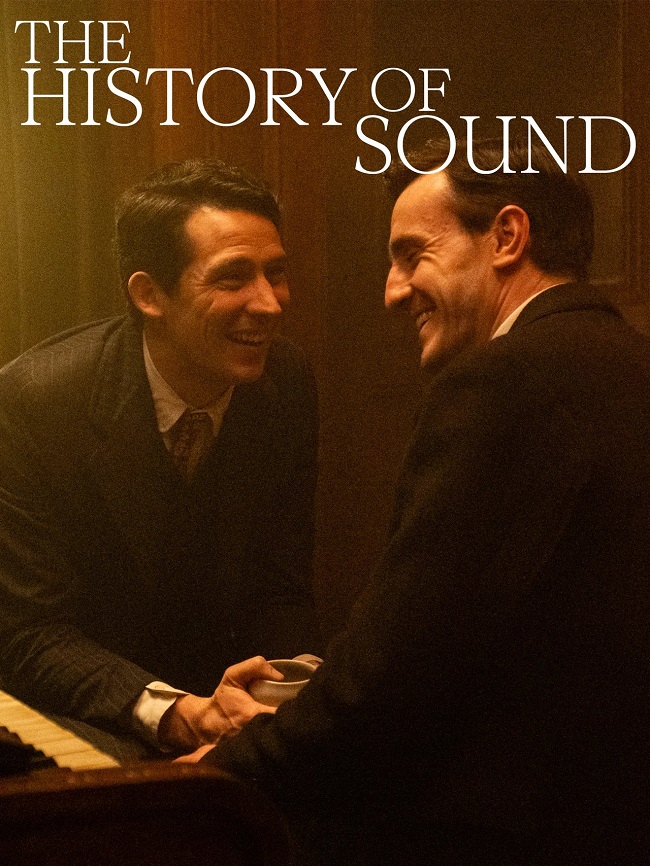
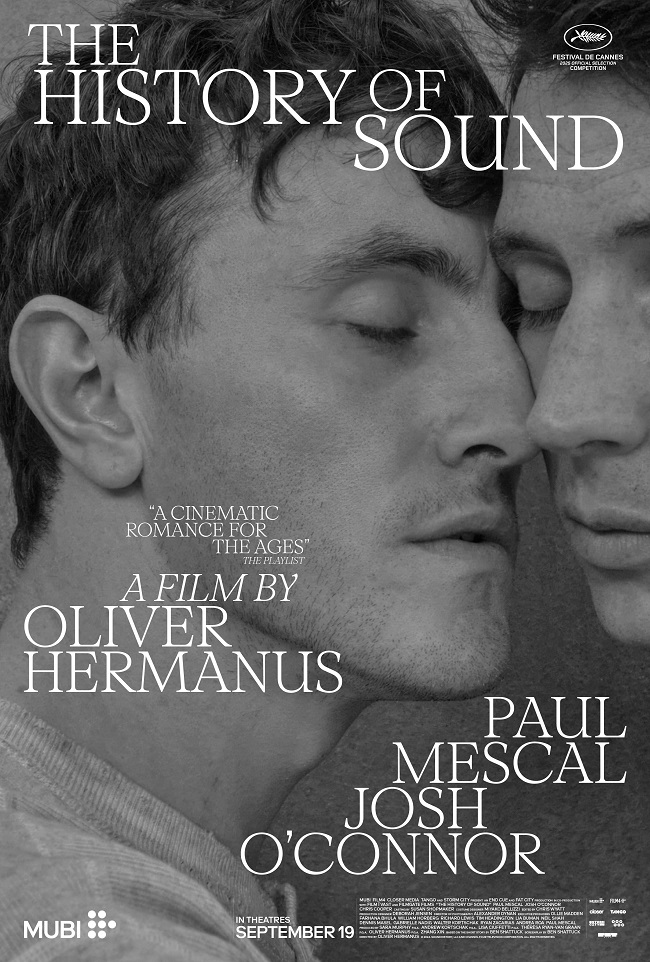
If you’re in the mood for something rich in atmosphere, gentle in heartbreak, and deeply invested in music as memory, Oliver Hermanus’s The History of Sound — starring Paul Mescal and Josh O’Connor — is now available on digital VOD and streaming via MUBI. It’s not the kind of film you throw on for popcorn and spectacle; it’s one you listen to, settle into, and let quietly wash over you.
What It’s About
Set in the 1910s and ’20s, the story follows Lionel (Mescal), a gifted music student at the Boston Conservatory in 1917, and David (O’Connor), a fellow composition student who becomes his kindred spirit. Their bond forms through a shared love of folk music — Lionel brings tradition and instinct, while David contributes curiosity and formality. Years later, the two reunite to journey through the Maine wilderness, recording folk songs and preserving the voices of a vanishing America.
What unfolds is more than a romance. It’s a film about sound and silence, about memory and loss, about what happens to love when time and distance intervene. Everything about The History of Sound feels restrained and intimate — until the music arrives, and suddenly the film bursts into emotion.
Why It’s Worth Watching
Paul Mescal and Josh O’Connor are, quite simply, electric together. Both actors have carved reputations for playing emotionally complex, quietly vulnerable men, and their chemistry here is understated but deeply felt. Their connection plays out through glances, gestures, and shared stillness — the kind of acting that rewards close attention.
Oliver Hermanus, whose previous work (Moffie, Living) established him as a director attuned to quiet inner lives, brings the same tenderness here. He lets scenes breathe, capturing the way small human moments — a song, a recording session, a hesitant confession — can echo for years.
The landscapes of rural Maine are captured with a painter’s eye. Nature feels alive, present, and almost like a third character. The recording of folk songs becomes both literal preservation and emotional metaphor — a way of holding on to something that time can’t quite erase.
And while The History of Sound will inevitably draw comparisons to Brokeback Mountain, it stands apart. This isn’t a tragedy of forbidden love; it’s a meditation on connection, art, and what remains when life moves on.
A Few Caveats
The film is deliberately slow, and its quiet tone may test some viewers’ patience. There are long stretches with little dialogue and a focus on atmosphere over plot. For some, that will feel meandering — for others, it’s exactly the point.
There’s also a restraint in how the film approaches intimacy. It’s not interested in explicitness or melodrama. Instead, it finds power in suggestion and emotion — in what isn’t said, what isn’t shown, what’s left between two people.
Why It Matters
In a movie landscape dominated by noise and speed, The History of Sound dares to be quiet. It’s a film that asks you to slow down and really listen — to the songs, to the silences, to the tremor in a voice. Watching it at home on MUBI or digital feels right; it’s the kind of movie best experienced in stillness, with the volume just a little higher than usual.
At its heart, this is a story about how we remember love — through echoes, recordings, and the sounds that outlast us. In that way, The History of Sound feels timeless, tender, and quietly devastating.
Final Thought
If you hit play tonight, do yourself a favor: turn off notifications, dim the lights, and let the film breathe. Let the folk songs linger. Let the pauses speak. The History of Sound doesn’t shout its beauty — it hums it, softly but persistently, until it stays with you.